AI Consulting
Find out where AI genuinely helps your business, then turn it into a working setup.
Process analysis, prioritised roadmap, pilot, handover and documentation.

Fahri Aksoy · AI and automation consultant
I map how your work actually runs, then build automations and AI solutions that remove repetitive tasks and fit the way your team already works. Process first, technology second.
20 minutes · free · online · in English or Turkish
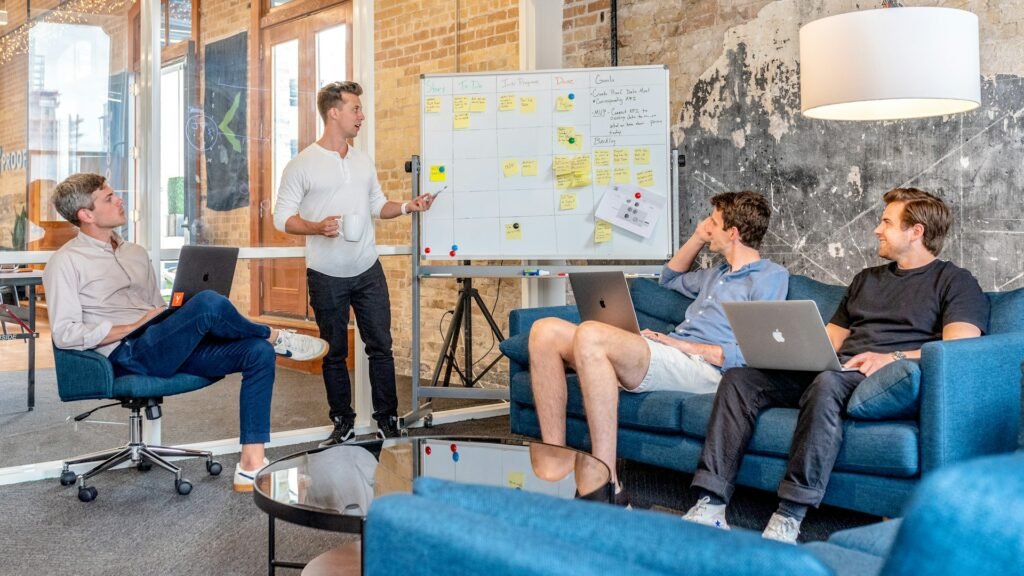
 Process first, technology second
MSc in Data Science
Professional experience as a data engineer
BSc, Ondokuz Mayıs University
One person from strategy to build and handover
Services
My focus is AI consulting and process automation. Every project starts with the same question: how does this work actually get done today?
Find out where AI genuinely helps your business, then turn it into a working setup.
Process analysis, prioritised roadmap, pilot, handover and documentation.
Turn repetitive manual work into flows that run on their own, with people kept in control.
Reporting, request handling, data transfer between systems, document workflows.
Hands-on training built on your team's own tasks, not generic demos.
Prompt library, usage policy draft, verification checklist.
Assistants that work with your own data, internal tools and integrations, when off-the-shelf tools fall short.
Scope, prototype, build, handover. The code and accounts stay yours.
Here for social media or a brand partnership? Social Media & Content Consulting · Advertising & Partnerships
Sound familiar?
If one of these describes your team, we have probably already found where AI and automation can help fastest.
Data is downloaded from three dashboards and pasted into a spreadsheet. Nobody has measured how many hours it takes.
The price list is in one folder, the procedure in an old email. New starters have to ask someone every time they need the right document.
Reading incoming requests and forwarding them, answering the same questions again and again. Small one by one, large in total.
Form responses go into a spreadsheet by hand, then into the accounting tool by hand. Every copy is another chance of an error.
The team has tried the tools and seen a few impressive demos, but nothing has stuck in day-to-day work.
Ideas, copy, visuals and publishing are rebuilt from scratch every week, and production depends on one person’s memory.
Approach
A four-step process. Each step ends with something concrete in your hands, so you can see what you have before moving on.
We talk through how things run today: who does what, how often each task repeats, where work waits.
Output: process map and a list of time drains
We rank the opportunities by impact and effort. Not everything gets done at once.
Output: roadmap and a chosen pilot
The chosen workflow is built, tested and run alongside the manual process for a while.
Output: a working automation or workflow
Your team is trained and receives documentation. Accounts and control stay with you.
Output: documentation, training, optional maintenance
Example use cases
These are not finished client projects. They are the areas that come up most often in small and mid-sized businesses, with how well each one suits automation. The last item is there on purpose: some work should stay with people.
Collecting data from several sources and turning it into a report by hand.
Fit for automation: very high
Copying a record from one tool into another.
Fit for automation: very high
Answering the same questions repeatedly, sorting requests and routing them to the right person.
Fit for automation: high
Filling in the same template by hand every time.
Fit for automation: high
Drafting, reformatting and adapting content for different platforms.
Fit for automation: high
Time lost hunting for information across documents.
Solution: an assistant that works with your own data
Reading long documents and pulling out the key points.
Fit for automation: medium
Interpretation, negotiation and handling exceptions.
Low: keep it with people
Fahri AksoyAbout
I’m Fahri Aksoy. I studied statistics at Ondokuz Mayıs University and have lived in England since 2018. I completed an MSc in Data Science at the University of Southampton and worked as a data engineer at BP.
That background taught me to break a problem into parts and to ask why a system isn’t working. I use the same approach with businesses today: first I understand how the work really runs, and only then do we choose tools.
For about three years I have also been producing content on my own channels. That is where I learnt that building a system is easy; keeping it running every week is the hard part.
Blog
Not tool reviews. Practical articles on which work is worth automating, how teams can use AI safely, and when the investment makes sense.
If your team has started using AI tools, you need a written rule. The seven sections of a one-page policy people actually…
The right time isn't the same for every business. Six signs you're ready to invest in AI, four signs it's still too…
Not every repetitive task is worth automating. A practical five-question filter, a worked example and a prioritisation table for deciding which work…
YouTube
On YouTube I publish business conversations and analysis of UK current affairs, mostly in Turkish. This list updates automatically from the channel.
Common questions
In four steps: discovery, prioritisation, implementation and handover. I first understand how the work really runs, then we decide together where to intervene, I build it and hand it over to your team. Each step ends with a concrete output.
The discovery call takes 20 minutes. A process review usually takes one to two weeks, and getting a pilot automation working typically takes two to four weeks. Larger scopes take longer; I don’t want you to commit to anything long before you have seen a first concrete result.
Yes. I do the build; your team’s job is to use what comes out of it. At handover I provide training and written documentation.
I ask five questions: does the task repeat regularly and in the same way, can its steps be written down, are the input and output clearly defined, are the rules clear, and can a mistake be reversed? We then rank the candidates by time spent and effort to build.
Data security is discussed on day one. We decide together which data goes to which tool, leave out anything the process doesn’t need, and where data is sensitive we look at options that keep it inside your organisation. Requirements are assessed project by project; if you have legal obligations, we discuss them before starting.
Yes, that’s the point. Accounts are opened in your name, documentation is handed over, and any custom code belongs to you. I don’t build anything that makes you dependent on me.
20 minutes · free · online
A free 20-minute discovery call. I won't try to sell you anything: we talk about how the work runs, where it gets stuck and what is worth fixing. At the end you either receive a written scope, or I tell you honestly that you don't need me for this.
or send an email: fahriaksoy.tr@gmail.com